
What Really Happens During a Night Shift? Inside the Life of a Professional Security Officer
What Really Happens During a Night Shift? Inside the Life of a Professional Security Officer
While most people are settling in for the evening or heading home after a long day, a different kind of work is just beginning. For professional security officers, the night shift is a critical part of protecting businesses, properties, and people. Although it may appear quiet from the outside, night-time security involves constant vigilance, responsibility, and professionalism.
A typical night shift begins with a thorough handover from the day team. This includes reviewing incident reports, checking site instructions, and confirming any specific concerns that may require extra attention. Clear communication at this stage is essential, as it ensures continuity and allows the night officer to begin their shift fully informed and prepared.
Once the shift is underway, regular patrols form a core part of the role. These patrols may involve inspecting entry points, checking that doors and windows are secure, monitoring restricted areas, and ensuring that alarm systems and CCTV equipment are functioning correctly. Even when nothing appears out of the ordinary, these checks are vital. A visible and consistent presence acts as a strong deterrent to potential intruders or vandals.
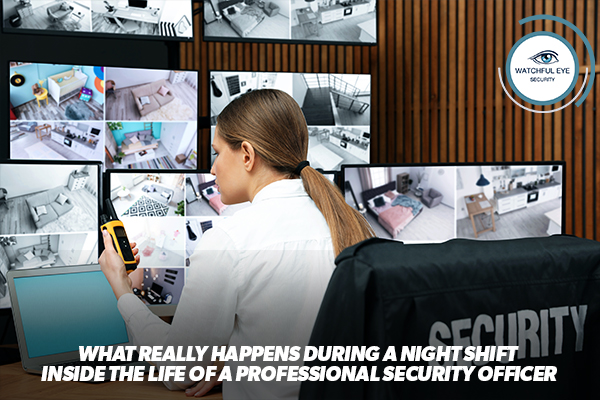
Monitoring surveillance systems is another key responsibility. Night-time can present increased risks, as buildings are often empty and surrounding areas quieter. A professional security officer remains alert, carefully observing live camera feeds and responding immediately to any unusual activity. Attention to detail is crucial, as small signs such as unexpected movement or unfamiliar vehicles can indicate a potential issue.
The night shift also requires strong decision-making skills. If an alarm is triggered or suspicious behaviour is detected, the officer must quickly assess the situation and follow established procedures. This may involve investigating the cause, contacting keyholders, liaising with emergency services, or completing detailed incident reports. Remaining calm and composed under pressure is essential, as swift and measured responses can prevent situations from escalating.
Beyond responding to potential threats, night security officers often carry out additional duties that support the smooth running of a site. This can include logging vehicle movements, managing access for authorised late-night staff or contractors, and conducting health and safety checks. These tasks contribute to overall site management and help maintain a safe and secure environment.
Working through the night requires resilience and focus. Fatigue can be a challenge, but professional officers are trained to manage their alertness and maintain high standards throughout their shift. Discipline, routine, and commitment to responsibility ensure that security is never compromised, even during the quietest hours.
When morning arrives and the day team returns, the night officer provides a detailed handover, outlining any incidents, observations, or actions taken. This seamless transition ensures that security remains continuous and effective.
Although much of a night shift may pass without major incidents, its importance should never be underestimated. The presence of a dedicated security officer provides reassurance and protection when buildings are at their most vulnerable. Behind the scenes, throughout the quiet hours, professional security officers play a vital role in safeguarding businesses and giving owners and employees peace of mind.